
Fuel Tanker Trailers for Sale, 30,000–90,000 Liters, China Manufacturer
LionKar fuel tanker trailer is designed for petroleum depot distribution, petrol and diesel delivery, cross-border fuel transport, mining diesel supply and long-distance liquid fuel logistics.
- Tank Material: Carbon Steel / Aluminum Alloy / Stainless Steel
- Configuration: 2 / 3 / 4 Axles | Multi-Compartment Options






What Is a Fuel Tanker Trailer?
A fuel tanker trailer is a road semi-trailer with one or more permanently mounted tank compartments designed for the bulk transport and distribution of liquid fuels. Depending on the cargo and local market terminology, it is also commonly called a fuel tanker semi trailer, petroleum tanker trailer, petrol tanker trailer, diesel tanker trailer, or oil tanker semi trailer.
In countries such as Ghana and Zambia, there are stable demand for fuel tanker trailers & trucks, supported by its mining, construction, transportation, power generation, and petroleum distribution sectors. Diesel and gasoline must be delivered from fuel terminals and depots to filling stations, mining sites, construction projects, industrial facilities, and remote operating areas.
Fuel Tanker Trailer Types
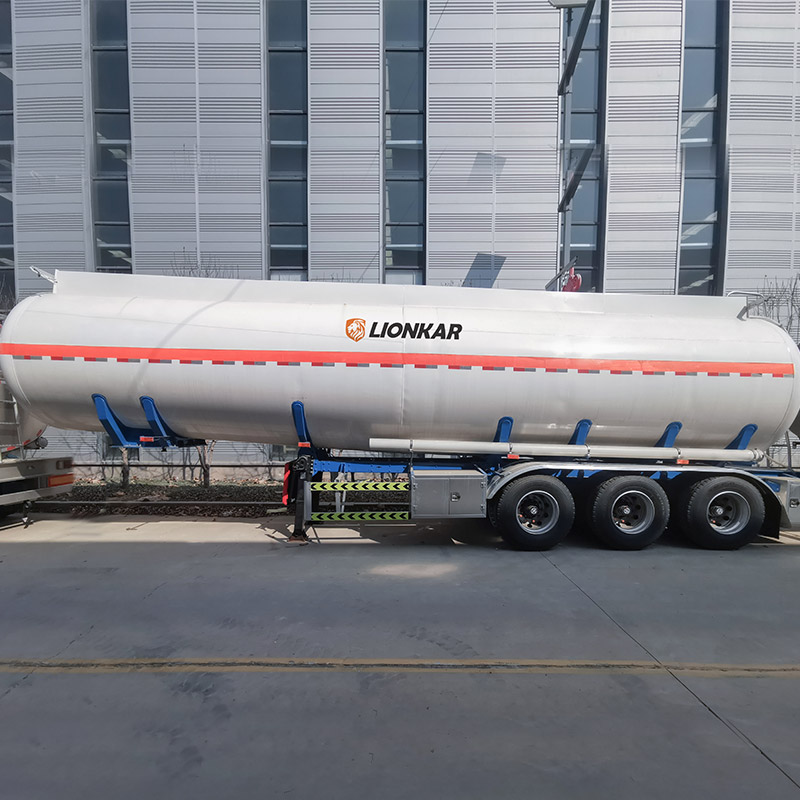
3 Axle 40000 L Fuel Tanker Trailer
40,000L 3-axle fuel tanker trailer for fuel distribution in Ghana, Zambia and other African markets, with optional compartments, bottom loading and heavy-duty suspension.

3 Axle 42000 L Petrol Tanker Trailer
42,000L petrol tanker trailer with 3 axles for gas station supply and regional fuel delivery in Ghana Zambia and West Africa, with multi-compartment options.

60000 L Aluminum Tanker Trailer
60,000L aluminum tanker trailer for long-distance fuel transport in Africa, offering lower tare weight, higher payload potential and optional multi-compartment tank configurations.

3 Axle 45000 L Diesel Tanker Trailer
45,000L 3-axle diesel tanker trailer for mining, oilfield and fuel distribution operations in Zambia and Ghana, with heavy-duty chassis and pump discharge options.
Fuel Tanker Trailer Parameters
Compare the available configurations to see whether the LionKar tanker trailer matches your required capacity, operating conditions and transport needs before moving to a detailed quotation.
| Specification | Available / Typical Options |
| Tank Capacity | 30,000–90,000 Liters (30–90 CBM) |
| Tank Material | Carbon Steel / Aluminum Alloy / Stainless Steel |
| Axles | 2 Axles / 3 Axles / 4 Axles |
| Compartments | Single Compartment / 2 / 3 / 4 / 5+ Fully Separated Compartments / Anti-surge Baffles |
| Suspension | Mechanical Suspension / Bogie Suspension / Air Suspension |
| Loading System | Top Loading / API Bottom Loading |
| Discharge System | Gravity Discharge / Pump Discharge |
| Safety System | Emergency Shut-off Valve / Anti-static Grounding / Anti-overflow System / Pressure or Breathing Valve / Anti-surge Baffles |
| Tank Shape | Round / Oval / Elliptical / D-shape / Square-round |
| Tank Thickness | Carbon Steel: typically 4–6 mm; selected according to tank design and capacity |
| Brake System | Pneumatic Brake System / WABCO or Equivalent |
| ABS / EBS | ABS / EBS Available |
| Tires | 12.00R20 / 12.00R22.5 / 315/80R22.5 / Other Market-specific Options |
| Kingpin | 2-inch / 3.5-inch |
| Landing Gear | JOST / Equivalent Heavy-duty Landing Gear |
Customisation note: Any custom configuration remains subject to engineering review and target-market requirements.
Detail Videos of Fuel Tanker Trailers
These videos show fuel tanker trailers prepared for customers in countries such as Ghana (Accra and Kumasi, via Tema Port) and Zambia (Lusaka and Ndola, via Dar es Salaam Port, Tanzania)., with different tank materials and capacities selected for local fuel distribution, regional transport and operating conditions.
This 3 axle 42000L aluminum fuel tanker trailer combines lower tank tare weight with multi-compartment fuel distribution capability for Ghana. The aluminum petrol tanker trailer can serve depot-to-station routes carrying petrol, diesel or other compatible refined fuels.
This 45m³ fuel tanker semi trailer is configured for Zambia’s longer-distance fuel distribution and project supply routes. The 45000L petroleum tanker trailer can transport diesel or petrol between depots, commercial stations, industrial users and remote operating sites.
Fuel Tanker Trailer Safety, Compliance & Quality Assurance
Selecting a fuel tanker trailer for countries such as Ghana and Zambia, requires careful consideration of road conditions, operating routes, fuel type, loading capacity, safety requirements, and local maintenance resources.
Chassis Reliability & Operating Conditions
The chassis should provide strong load-bearing capacity, durable suspension, sufficient ground clearance, and reliable braking performance.
Axle configuration should match the required tank volume and operating conditions. You should also consider fuel quality compatibility, heavy-duty tires, spare parts availability, and local maintenance capability.
Proven chassis platforms with simple maintenance requirements can reduce downtime and improve fleet availability during intensive daily operations.
Tank Configuration & Fuel Transport Safety
The tank body should be designed specifically for diesel, gasoline, and other petroleum products, with suitable compartment configurations for different fuel grades.
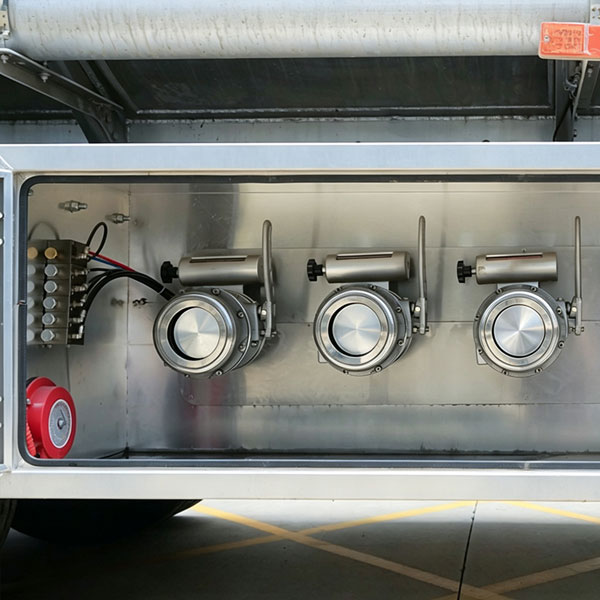
Important equipment includes emergency shut-off valves, anti-static systems, overflow protection, bottom loading and discharge systems, fire extinguishers, and reliable fuel pumps where required. Effective tank and chassis corrosion protection is also important in Ghana’s hot and humid environment.
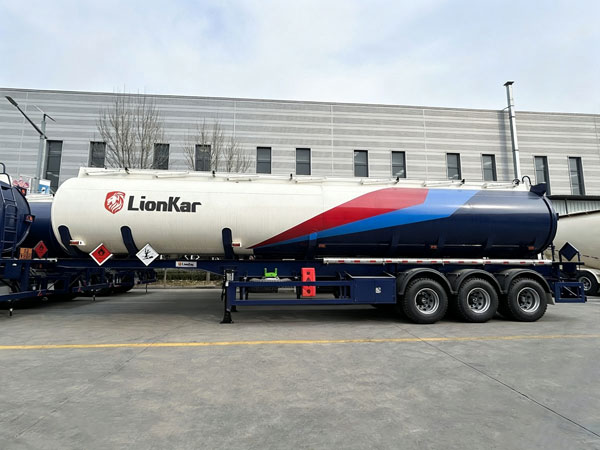
LionKar Manufacturing Capabilities & Global Reach
LionKar is a manufacturer of fuel tanker trailers and other commercial semi-trailers, with experience in tank structure, chassis configuration and export-market requirements. Our fuel tanker trailer range covers different capacities, tank materials, axle layouts, compartments and loading systems for fuel distribution, long-distance transport, mining, oilfield and site-supply applications.
LionKar Factory View & Service
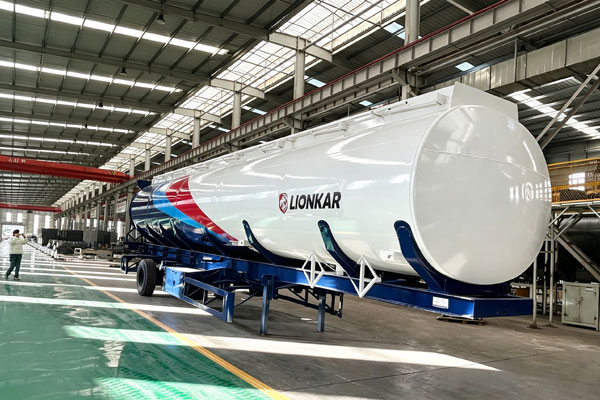
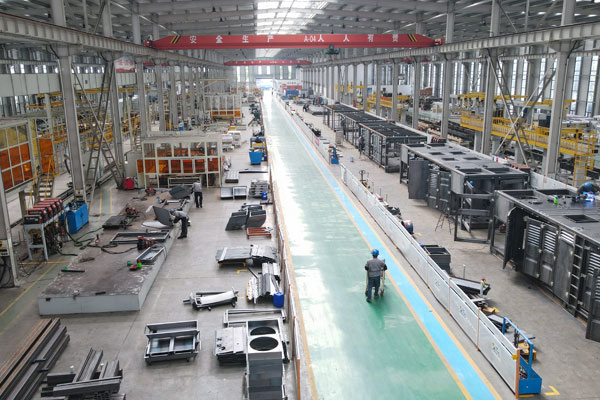
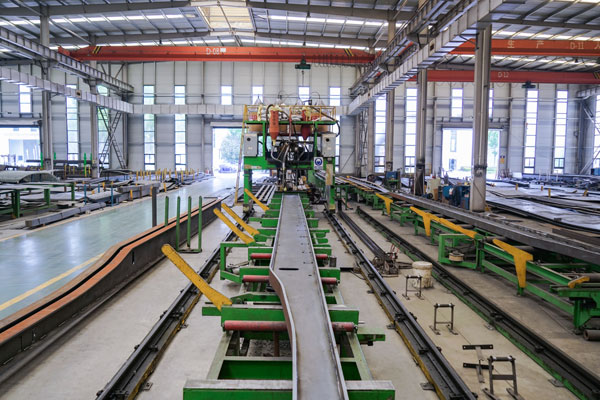
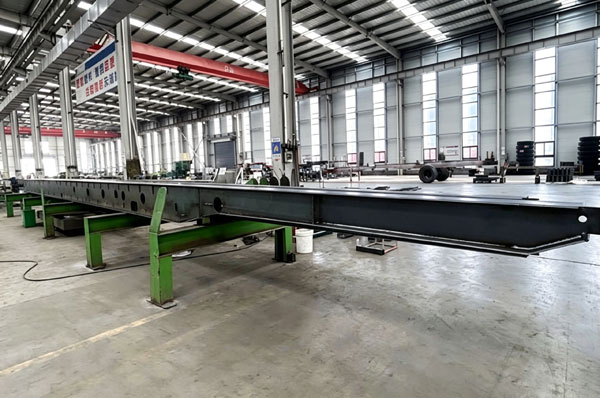
Fuel tanker trailer production covers plate cutting, tank forming, welding, compartment and baffle assembly, chassis fabrication, pipeline installation, painting and final inspection. LionKar operates with the equipment required for tank and semi-trailer production, including forming, welding and testing facilities. Tank sealing, valves, braking systems and completed configurations are checked during different production stages.
After delivery, semi trailer service may include follow-up support related to spare parts supply, component replacement, maintenance requirements, and technical information for standard trailer systems. This commonly involves axle assemblies, suspension parts, landing gear, king pin components, lighting systems, and fence structure accessories.
After-Sale Services
- Maintenance and Repairs
- Warranty Support
- Replacement Parts
Accessories and Upgrades
- Trailer Accessories
- Performance Enhancements
- Safety Features
Pre-Sale Services
- Expert Consultation
- Product Demonstrations
- Rigorous Testing Procedures
- Certification Standards
Customization Services
- Tailored Designs
- Branding Options
- Customized Improvement
Which Fuel Tanker Trailer Fits Your Business?
Different operating conditions require different fuel tanker trailer capacities, chassis setups and loading systems. The following typical configurations can help you identify a suitable starting point for your operation.
Fuel Distribution & Gas Station Supply
Fuel distribution between depots and gas stations commonly uses 30,000–50,000L fuel tanker trailers with 2 or 3 axles. Multi-compartment tanks are used for separated fuel grades or delivery points. Common loading and discharge configurations include API bottom loading, top loading and gravity discharge.
Long-Distance Fuel Transport
Long-distance and intercity fuel transport commonly uses 45,000–60,000L fuel tanker trailers with 3 axles. Carbon steel and aluminum tanks are both used. Typical configurations include anti-surge baffles, mechanical or air suspension, bottom loading systems and pneumatic braking systems.
Mining & Oilfield Fuel Supply
Mining and oilfield operations involve unpaved roads, rough surfaces, remote sites and frequent vehicle movement. Common tanker configurations include 40,000–50,000L capacity, 3 axles, reinforced chassis structures, carbon steel tanks and heavy-duty mechanical or bogie suspension. Pump discharge systems are also used for on-site fuel transfer.
Remote & Site Fuel Delivery
Fuel delivery to construction sites, rural areas and remote operating locations commonly uses 30,000–45,000L fuel tanker trailers with 2 or 3 axles. Typical configurations include mechanical or bogie suspension, reinforced chassis components and gravity or pump discharge systems. Vehicle size and axle configuration vary with road access and operating conditions.
Build Your Road Tanker Trailer With a Manufacturer
Tell us about your operating conditions, and preferred specifications. We’ll work with you to develop a road tanker trailer that matches your transport requirements.
What Our Customers Say About Lionkar Tanker Trailers
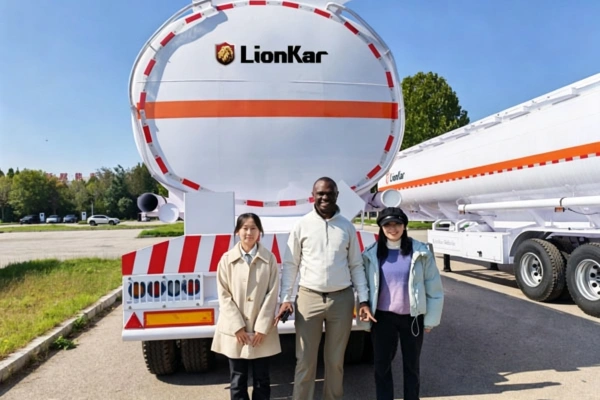
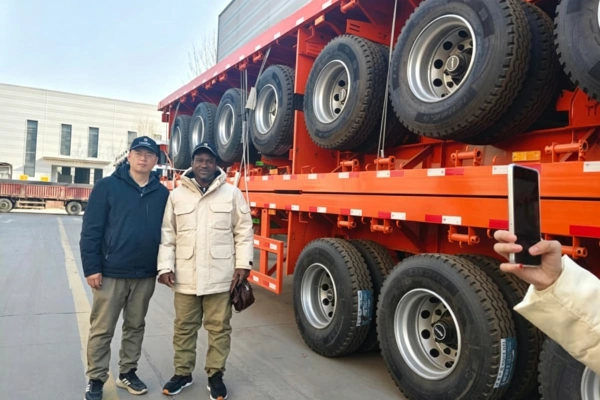
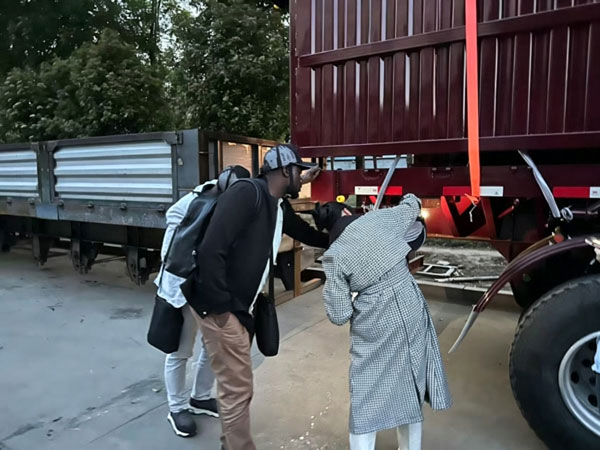
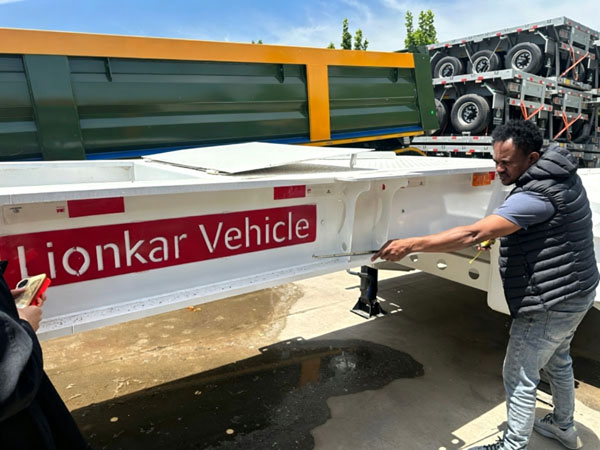
Customers visiting the LionKar factory often focus on the fuel tanker capacity, structure, welding, chassis construction, safety components and available configurations.
During the factory visit, the Nigerian customer paid particular attention to the tank structure, discharge system and accessibility of service components. For frequent petrol and diesel distribution, he considered straightforward maintenance and locally serviceable running gear important.
The Zambian customer focused on chassis construction, suspension and tank capacity while inspecting the petroleum tanker trailer. Long transport distances led him to discuss durability, maintenance access and how a 45m³ configuration could be matched to actual routes and tractor combinations.
The Ghanaian customer showed strong interest in the aluminum fuel tanker trailer, particularly the relationship between lower tank tare weight and usable payload. He also examined compartment arrangements for petrol-station distribution.
Customers from All Over the World Visit Fuel Tankers
LionKar welcomes fuel distributors, logistics companies, trailer dealers, fleet operators and project contractors to visit our factory. Customers can inspect fuel tanker trailers, tank structures, chassis components and production processes on site.
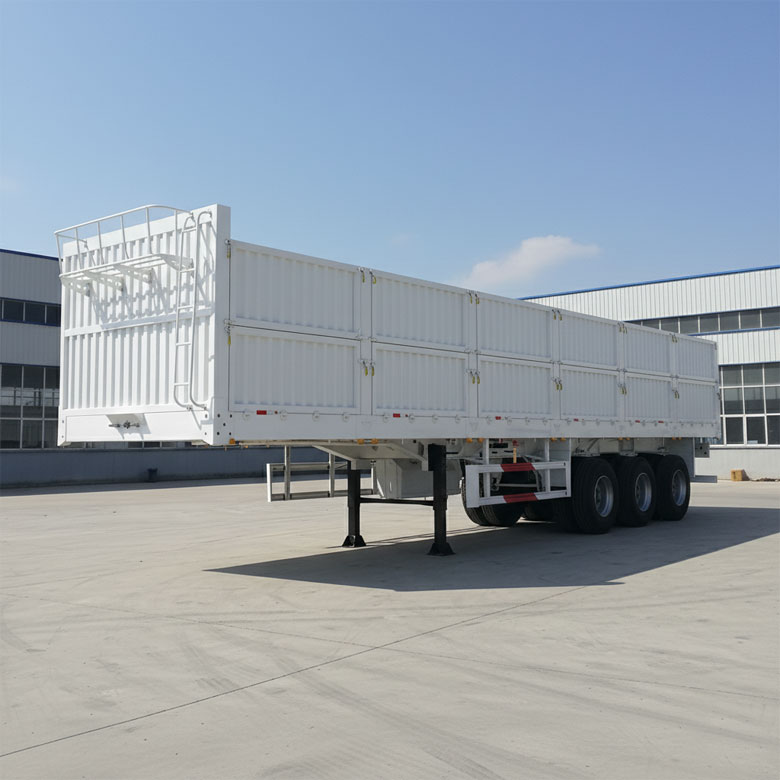
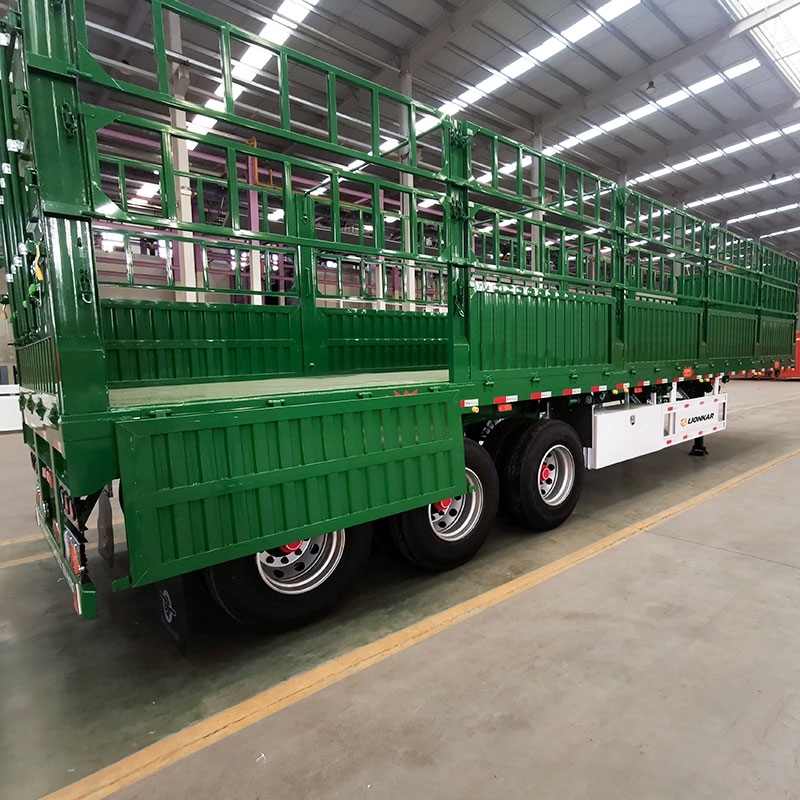
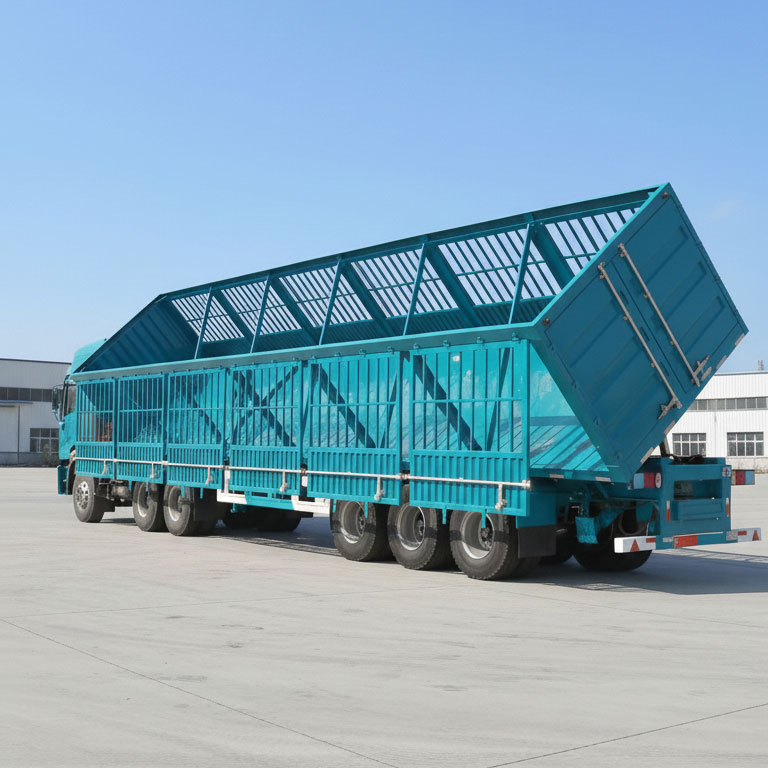
Semi Trailers Related to Fuel Tanker Trailers








Tractor Trucks Related to Fuel Tanker Trailers
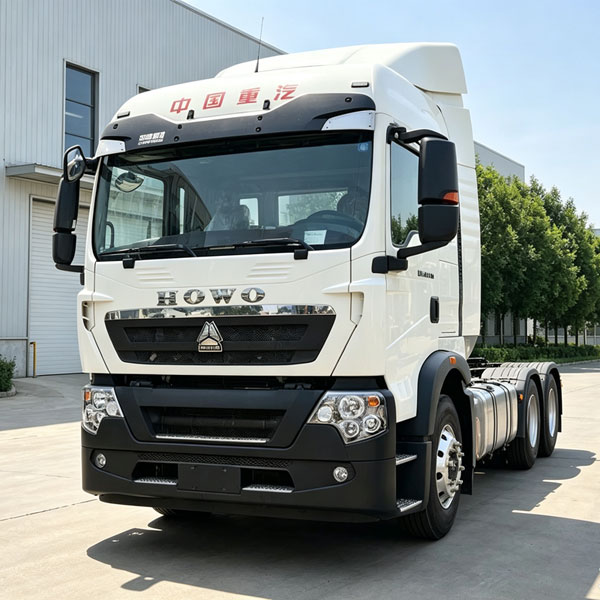
Sinotruk HOWO TX
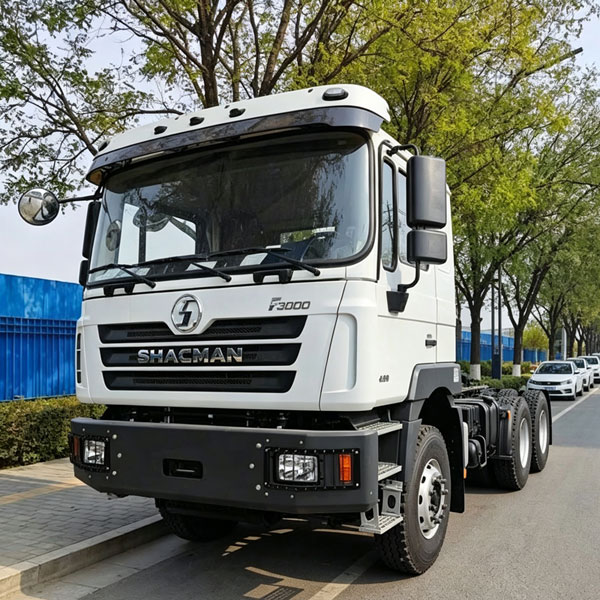
Shacman F3000
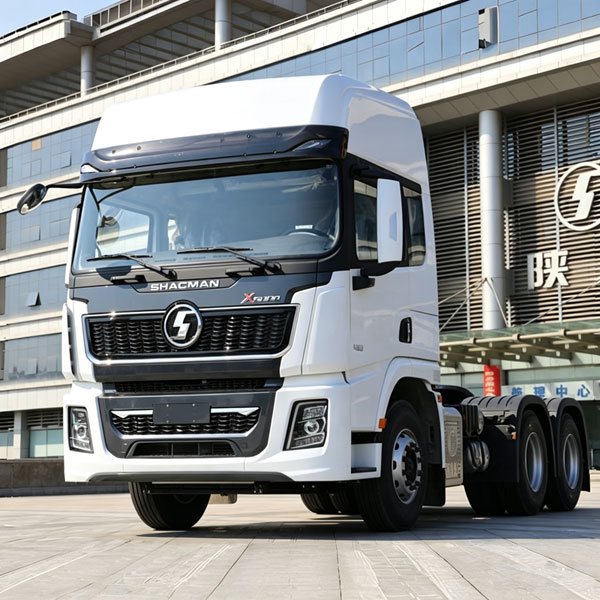
Shacman X5000
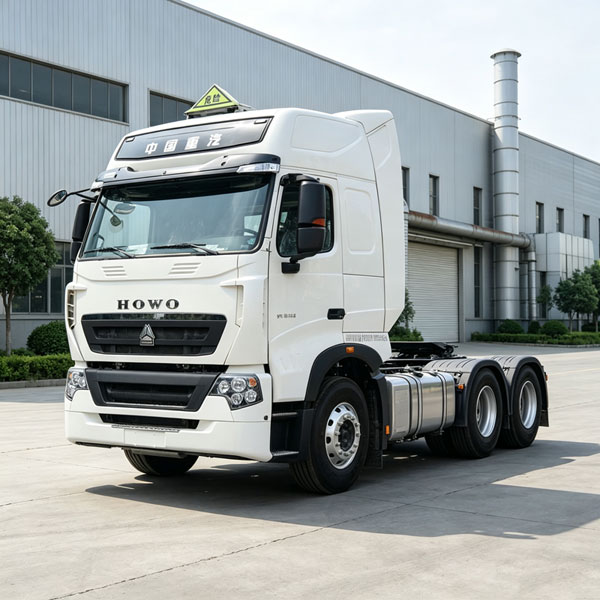
Sinotruk HOWO T7H
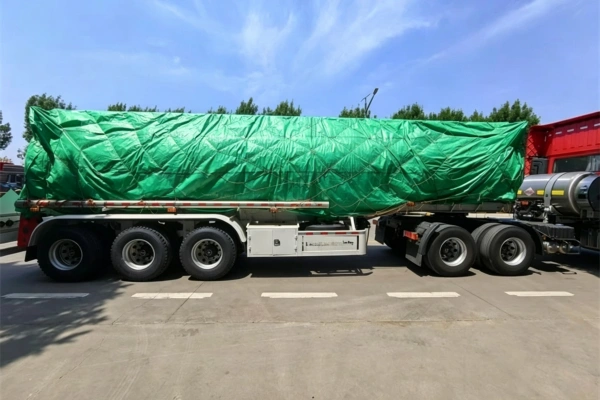
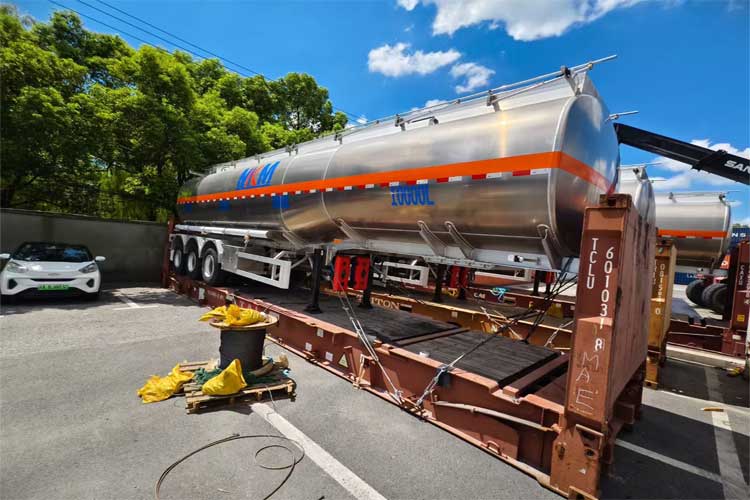
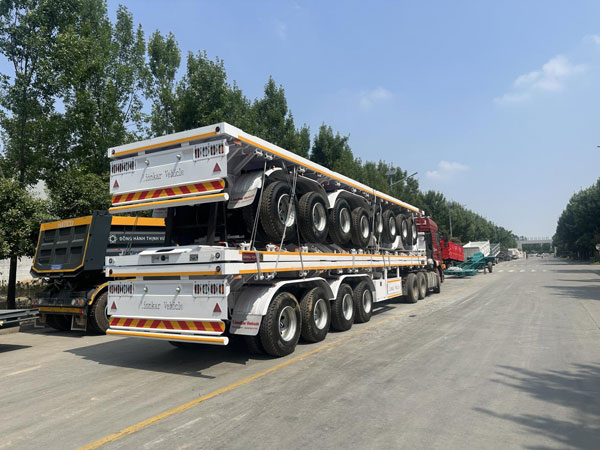
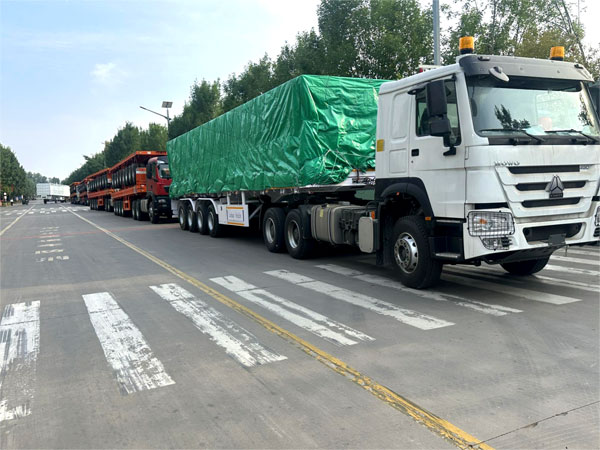
Fuel Tanker Trailer Packaging & Shipment Preparation
Before shipment, each fuel tanker trailer for sale in countries such as Ghana (Accra and Kumasi, via Tema Port) and Zambia (Lusaka and Ndola, via Dar es Salaam Port, Tanzania), is cleaned and dried, with manholes, valves, API couplers and discharge outlets sealed against moisture and contamination. Exposed metal parts and chassis surfaces are checked for coating damage and touched up with anti-rust protection where needed.



Fuel Tanker Trailer FAQs
Find quick answers to common questions about fuel tanker trailer configuration, road adaptation, maintenance, pricing and purchasing.
How much does a fuel tanker trailer for sale cost?
Fuel tanker trailer prices depend mainly on capacity, tank material, number of axles, compartments, suspension, loading system and optional equipment. For example, a 45,000 L carbon-steel, 3-axle, 4-compartment tanker may be priced at around US$14,000–18,000 per unit, FOB China, while an aluminum model with air suspension, vapor recovery and a flow meter would typically cost more.
What information is needed for a fuel tanker trailer quote?
The main information includes destination country, fuel type, required capacity, application and compartment requirements. A typical request might be: 45,000L tanker for diesel and gasoline distribution in Ghana, with 4 separated compartments and API bottom loading. Axles and suspension can be matched after these requirements are clear.
How long does it take to manufacture and ship a fuel tanker semi trailer?
Production normally covers drawing confirmation, tank and chassis fabrication, system installation, testing, painting and final inspection. Standard production time is 20 working days, while customized units usually take 30 working days. Sea transit time varies by destination port and shipping method.
Will a fuel tank trailer work with my tractor truck?
The main matching points are kingpin size, fifth-wheel height, air-brake connections, electrical system and allowable combination weight. Common setups use a 2-inch kingpin, pneumatic brakes and a 24V electrical system. The tractor model and fifth-wheel height are normally checked before production.
Are fuel tanker trailer spare parts easy to replace locally?
Common parts such as axles, brake chambers, suspension components, landing gear, tires and electrical parts can use widely available brands and standard sizes. Tanker-specific parts include API valve seals, emergency bottom-valve parts, manhole gaskets and discharge hoses. Spare-parts kits can also be supplied with the trailer.
What is the minimum order quantity for a fuel tanker trailer?
The minimum order quantity is 1 unit. A single trailer can be produced with the required capacity, tank material, axle setup and compartment layout.
What payment terms and Incoterms are available for oil tanker trailer orders?
LionKar accepts T/T 30% deposit before production and 70% balance against B/L copy;
100% irrevocable L/C at sight. Available Incoterms include FOB / CFR / CIF / EXW. FOB covers delivery to the agreed loading port, while CIF includes ocean freight to the named destination port.
Looking for a factory-direct fuel tanker semi trailer manufacturer?
Buy directly from Lionkar for custom-built trailers and better control over your sourcing costs.