- Maintenance and Repairs
- Warranty Support
- Replacement Parts
LionKar Bitumen Tanker Trailers transport hot bitumen from refineries and import terminals to storage depots, asphalt plants, and road construction projects across Africa.








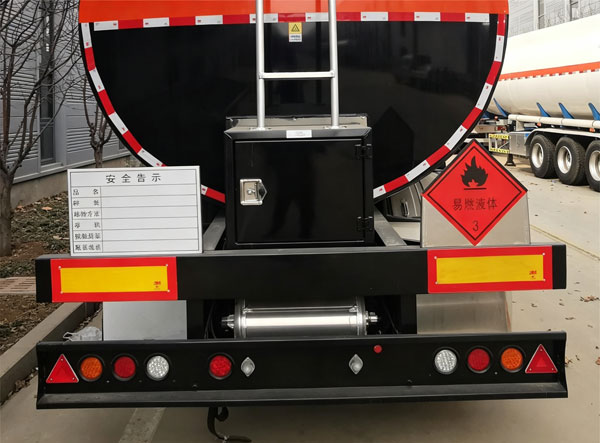
A bitumen tanker trailer is an insulated tank semi-trailer used to transport hot, high-viscosity bitumen. Its tank, insulation, piping, valves, and discharge system are designed to reduce heat loss and keep the cargo suitable for unloading. Onboard heating, usually provided by one or two diesel burners, is commonly recommended for longer transport or extended waiting times, but it is not required for every application.
Bitumen tanker trailers are also commonly referred to as bitumen tank trailers, hot bitumen tankers, liquid bitumen tankers, insulated bitumen tankers, and liquid asphalt tanker trailers.
A typical bitumen tanker uses an insulated carbon-steel tank with mineral-wool insulation, temperature monitoring, heat-resistant piping and valves, and gravity or pump discharge. The insulation slows temperature loss during transport. Where additional heat is needed, an onboard heating system can maintain or restore cargo temperature. A bitumen pump may be added when faster or more controlled unloading is required.
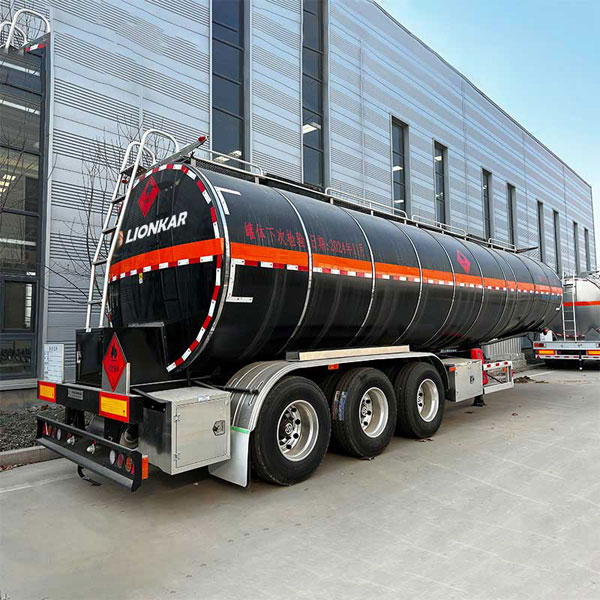
A typical bitumen tanker trailer combines an insulated tank, heavy-duty running gear, and discharge equipment suited to hot, high-viscosity cargo. Capacity, heating system, axles, suspension, and pump configuration can be adjusted to the operating requirements.
| Specification | Typical / Common Configuration |
| Tank Capacity | 30 / 35 / 40 / 42 / 45 / 50 CBM commonly available |
| Tank Material | Carbon steel |
| Tank Thickness | Approx. 5 mm shell / 6 mm heads |
| Compartments | 1-6 compartment |
| Thermal Insulation | 75–100 mm rock/mineral wool |
| Heating System | 1–2 diesel burners recommended; Onboard heating is optional |
| Discharge | Gravity discharge, Bitumen pump available for faster or independent unloading |
| Discharge Outlet | Approx. 4–6 inch |
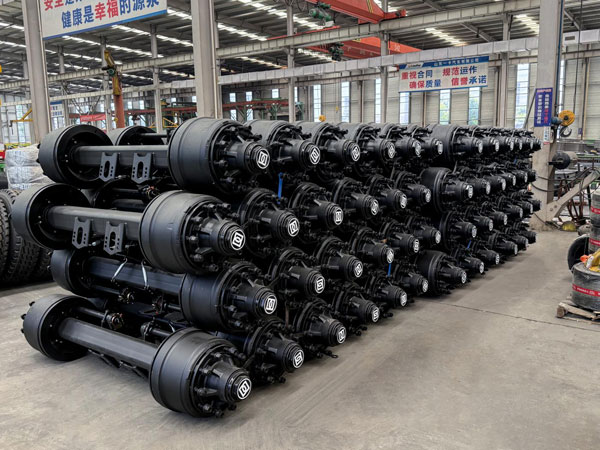
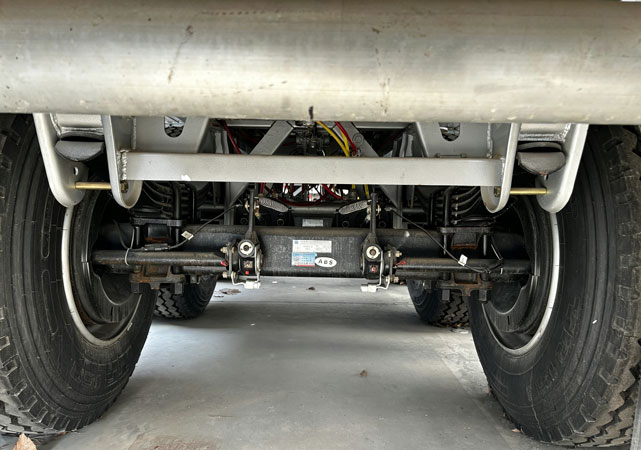
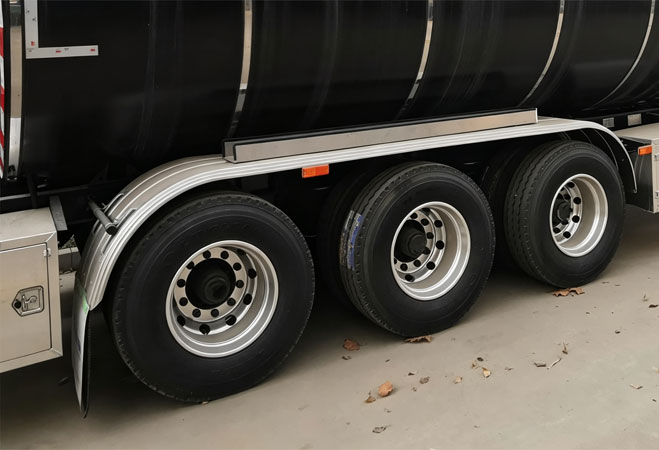
| Axles | 2, 3, or 4 axles according to tank size, payload, and local axle limits |
| Axle Brand | FUWA / BPW or equivalent |
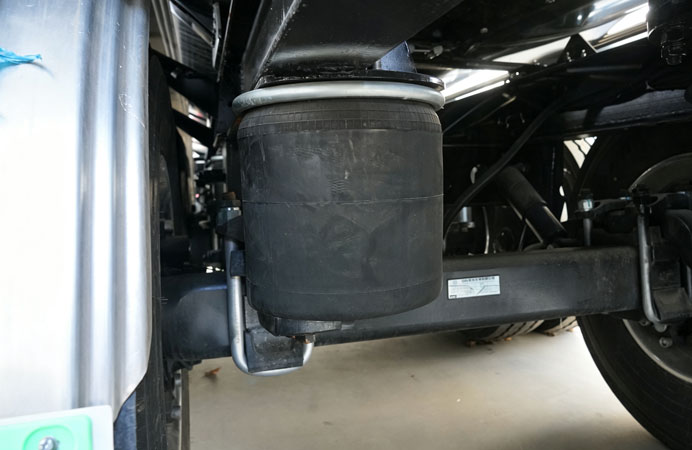
| Suspension | Mechanical suspension / Air suspension |
| Braking | Dual-line pneumatic braking, ABS / EBS and WABCO components available |
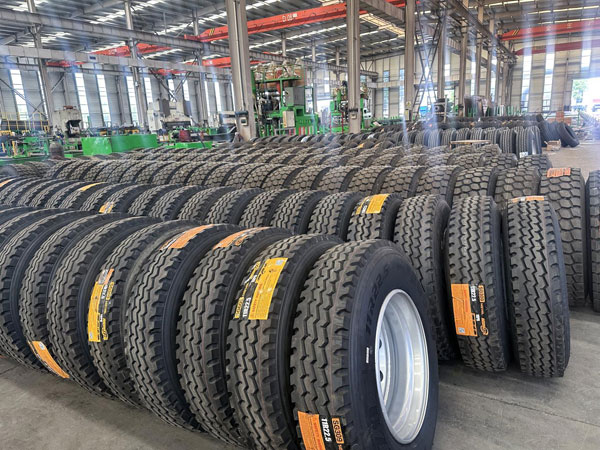
| Tires | 12R22.5 commonly used |
Customisation note: Any custom configuration remains subject to engineering review and target-market requirements.
LionKar has supplied bitumen tanker trailers to Nigeria (Lagos, Abuja by Lagos Port Complex in Apapa) and Tanzania (Dar es Salaam, Dodoma by Dar es Salaam Port in Dar es Salaam), covering different capacities, tank materials, and operating requirements. These export projects show how trailer specifications can change with transport distance, road conditions, cargo handling, and local operating needs.
This 3 axle 45,000L bitumen tanker trailer for Nigeria is intended for larger-volume road transport where tank capacity, heat retention, and stable running under loaded conditions matter during refinery, depot, and asphalt-plant supply.
This 30 CBM stainless steel tanker trailer for Tanzania uses a smaller tank and stainless construction for applications where cargo compatibility, cleaning, and corrosion resistance carry more weight than maximum volume, including selected binder and heated-liquid transport.
LionKar bitumen semi-trailers focus on 4 key points that directly impact daily haulage and unloading: heat retention, tough chassis, fast discharge, project-tailored specs.
75–100mm rock wool insulation cuts temperature loss. Add on-board diesel burner for long distance or long wait times, no external heating needed at site, zero risk of bitumen solidification before discharge.
All-Road Chassis & Running Gear, Built for both paved highways and rough unpaved site roads. LionKar matches chassis, axle layout, suspension and tires to your conditions and local legal load limits. 3-axle and 4-axle options available for different payloads and tough road conditions.
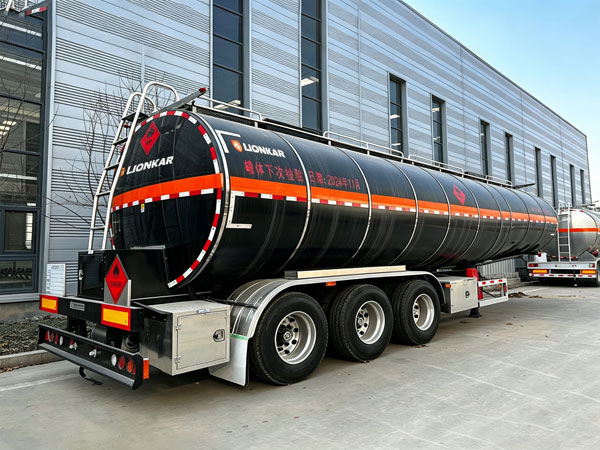
Supports both gravity free flow and high-viscosity bitumen pump, with customizable pipe and valve sizes. Reduces reliance on site facilities, perfect for temporary plants, remote sites and locations with limited unloading setup.
Tank capacity, insulation, burner, pump, axle brand, suspension and discharge layout all adjustable before manufacturing. A 42CBM short-haul refinery-to-plant unit does not need the same full heating setup as long-distance models.
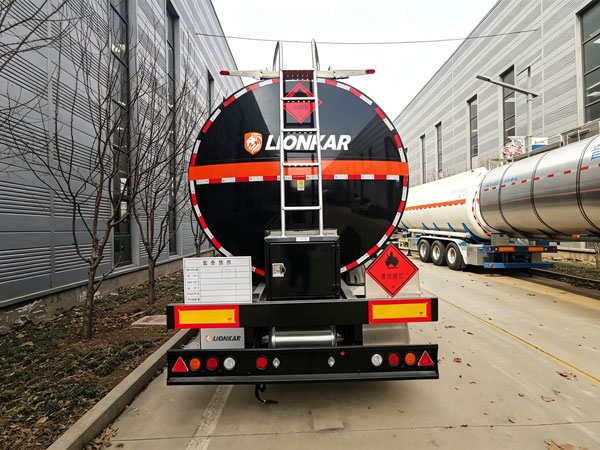
The performance of a bitumen tanker semi trailer depends on more than tank capacity. Axles and suspension carry the working load, insulation controls heat loss, valves and piping influence discharge. Component brands and specifications can be selected according to road conditions and operation requirements.
LionKar is a professional bitumen tanker trailer manufacturer in China with experience in insulated tankers, heated tanker configurations, heavy-duty semi-trailer chassis, and export projects. Our work covers vehicle design, fabrication, component installation, testing, and shipment, with specifications adjusted for different capacities, road conditions, tractor combinations, and destination markets.
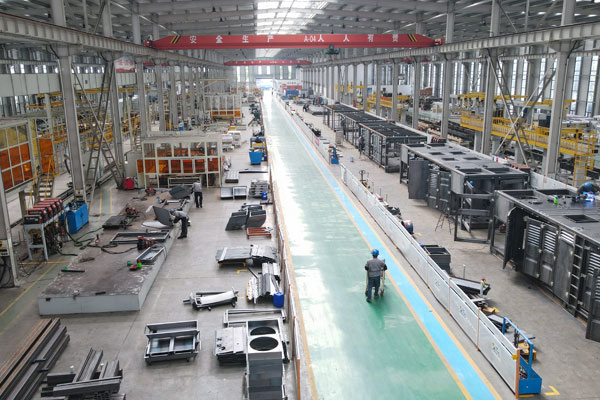
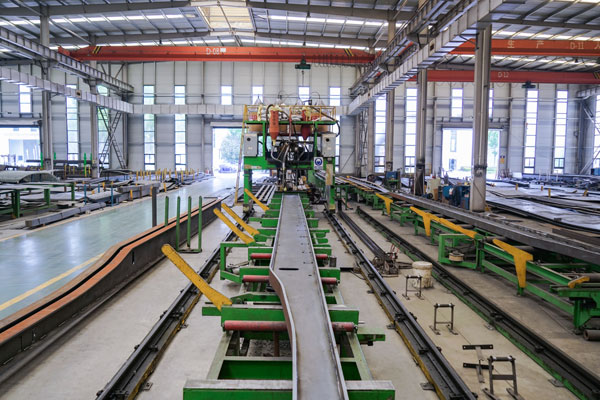
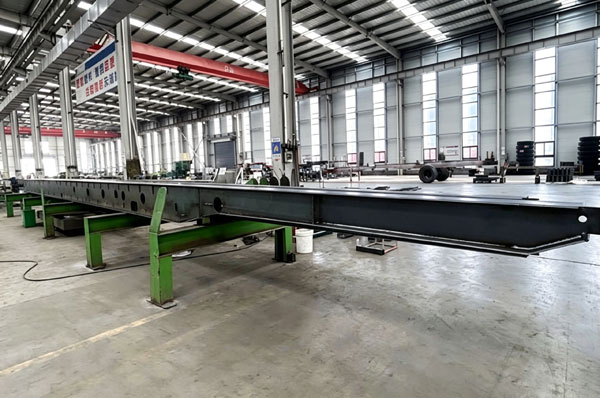
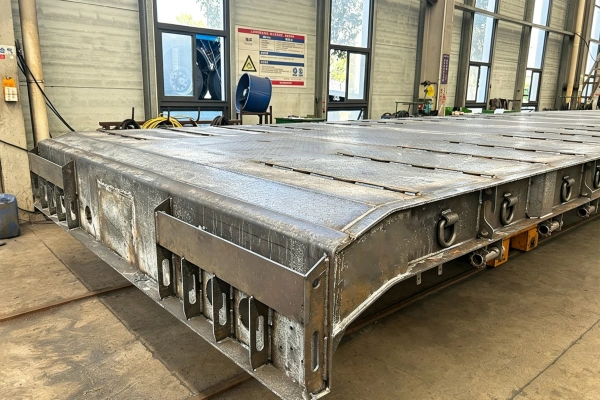
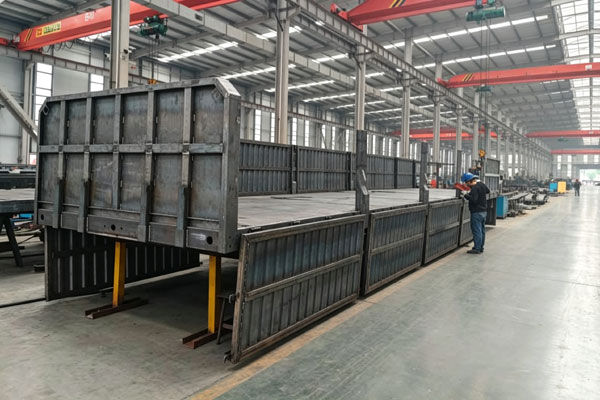
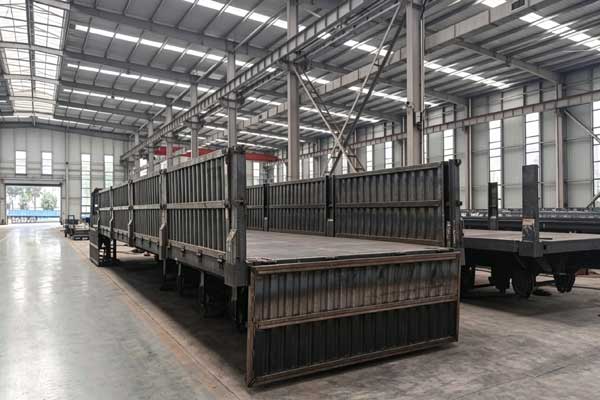
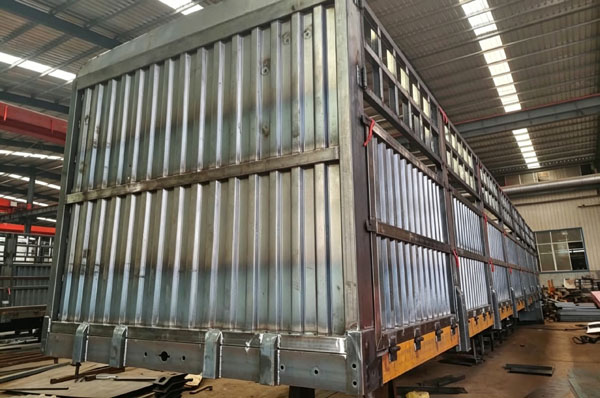
Bitumen tankers require more than a standard liquid tank production line. LionKar’s factory is equipped for tank forming, plate cutting, welding, chassis fabrication, insulation installation, piping assembly, painting, and final vehicle testing. Heating pipes, burner installations, discharge lines, and insulation layers can be fitted during production rather than added as separate aftermarket modifications.
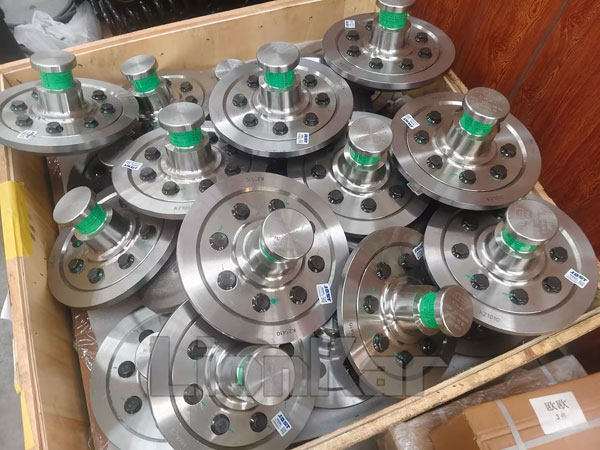
After delivery, semi trailer service may include follow-up support related to spare parts supply, component replacement, maintenance requirements, and technical information for standard trailer systems. This commonly involves axle assemblies, suspension parts, landing gear, king pin components, lighting systems, and fence structure accessories.
Bitumen tanker trailers are used to move hot binder between production, storage, and paving sites without losing too much temperature before unloading. Insulation, discharge method, and optional reheating help the trailer meet the need of different transport distances and receiving conditions.
A 40–45 CBM insulated bitumen tanker semi-trailer is widely used to move paving-grade bitumen from refineries or import terminals to storage depots. This type of bulk bitumen transport trailer suits regular high-volume transfer, its loading and unloading facilities are well established.
An insulated bitumen tanker trailer without onboard heating works on short depot-to-plant or refinery-to-plant transport, the cargo is loaded hot and unloaded soon after arrival. This short-haul liquid bitumen tanker often transports standard paving bitumen.
A heated bitumen tanker trailer with diesel burner reheating is suitable for transport that takes longer, vehicles may wait a long time before unloading, or the destination has limited heating equipment. A hot bitumen tanker trailer, to avoid the bitumen cooling down, can carry paving bitumen and other high-viscosity binders under these conditions.
A 45–50 CBM heavy-duty bitumen tanker semi-trailer is for road projects needing larger and more regular deliveries. This liquid asphalt tanker trailer supplies asphalt plants, temporary storage tanks, and project depots with paving bitumen during continuous construction work.
Tell us about your operating conditions, and preferred specifications. We’ll work with you to develop a road tanker trailer that matches your transport requirements.
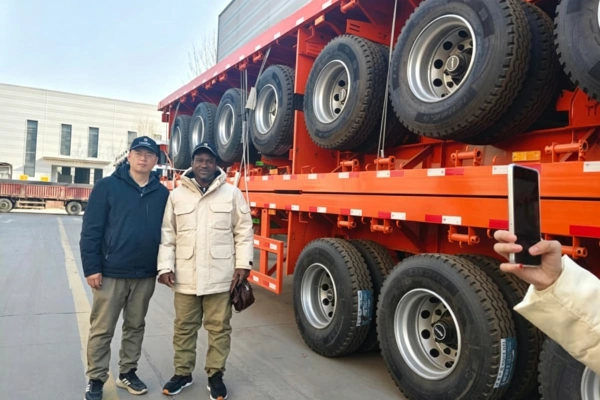
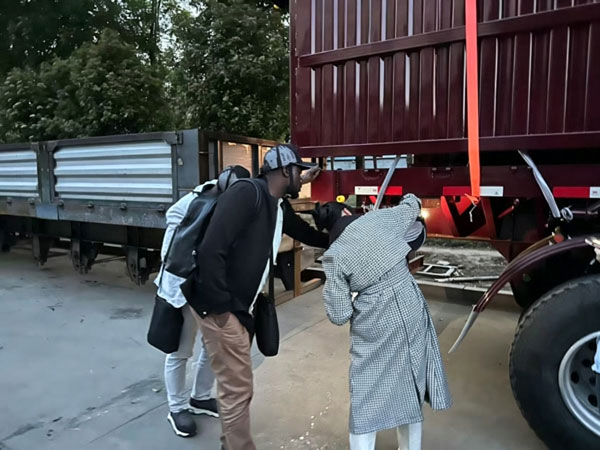
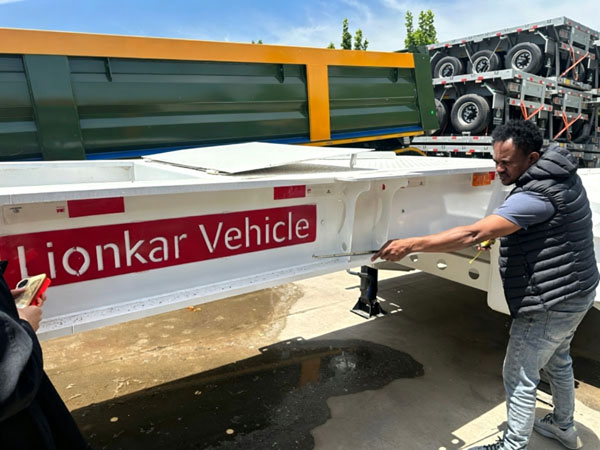
During factory visits, trailer buyers have closer view of details that are difficult to judge from specification sheets alone. You can have a deep consideration about how a tanker would work on your own countries.
A Nigerian customer paid particular attention to the insulated tank and heating arrangement. Their projects involved long movements between storage points and paving sites, so heat loss and unloading conditions mattered more than nominal capacity alone. Seeing the burner installation, discharge piping, and finished tank construction gave them more detail to consider when comparing heated bitumen tanker trailers.
A Zambian fleet customer visiting the factory focused on the chassis, axles, suspension, and maintenance access. Their vehicles regularly move between paved roads and unfinished project access roads. The customer showed particular interest in how axle configuration and suspension choice could change with payload and conditions, rather than selecting a bitumen tanker only by tank volume.
The Ethiopian customer in regional bitumen distribution industry examined several tanker capacities during the visit. Short depot deliveries and longer intercity tasks created different requirements for insulation, onboard heating, and discharge equipment. The customer was interested in keeping the basic tanker specification as simple as possible.
LionKar welcomes customers involved in bitumen transport, road construction, bulk logistics, and tanker fleet operation to visit the LionKar factory. A factory visit allows buyers to discussing the configuration needed for their own operating conditions and projects.
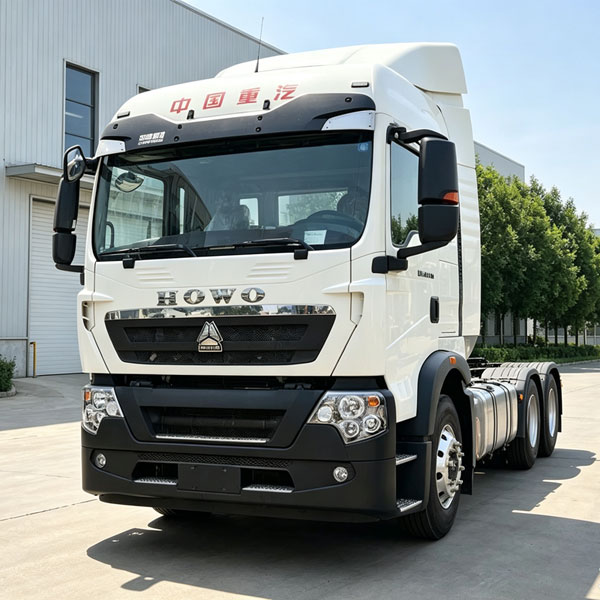
Sinotruk HOWO TX
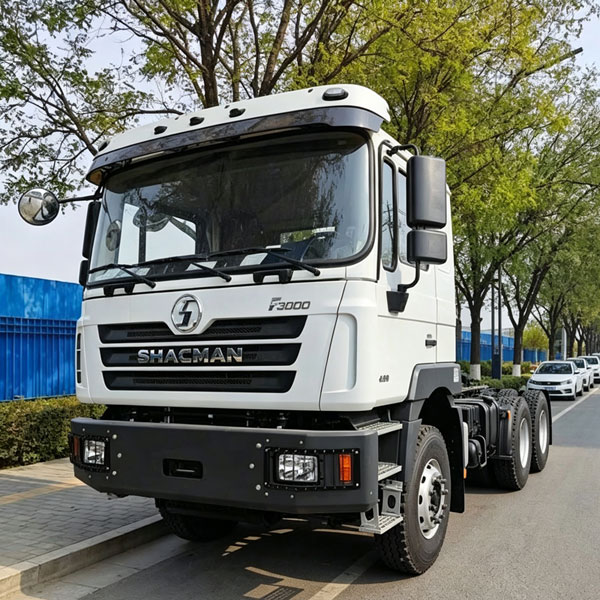
Shacman F3000
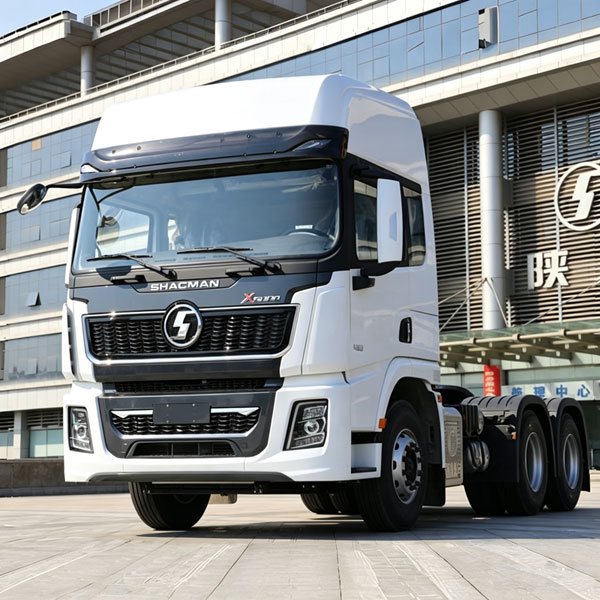
Shacman X5000
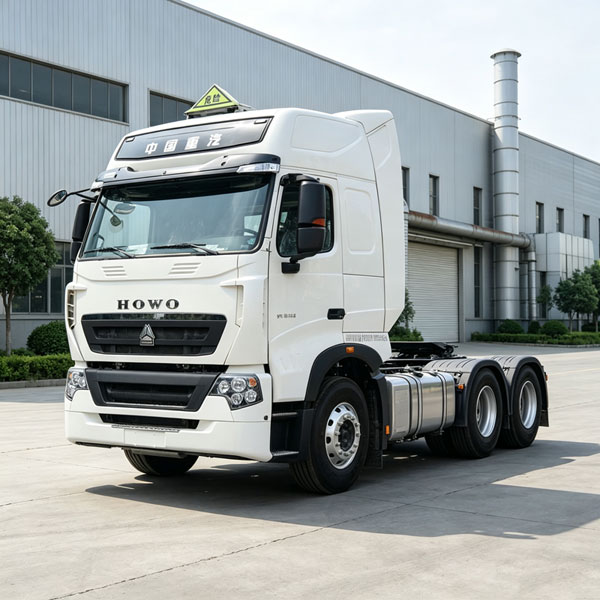
Sinotruk HOWO T7H
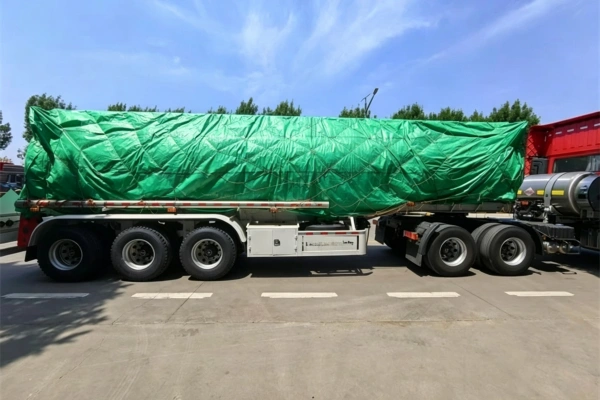
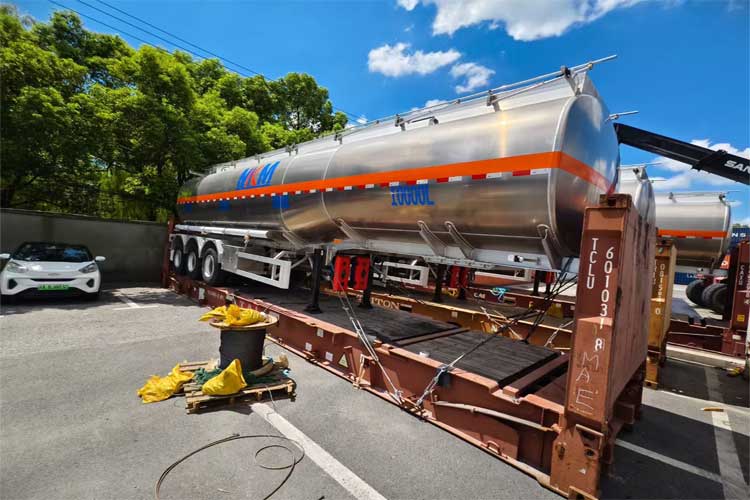
Before shipment, each best price bitumen tanker trailer for sale and export to Nigeria (Lagos, Abuja by Lagos Port Complex in Apapa) and Tanzania (Dar es Salaam, Dodoma by Dar es Salaam Port in Dar es Salaam) is inspected for tank body sealing, valves, piping, brakes, lights, and heating equipment. Exposed steel surfaces are protected against corrosion, while outlets and removable parts are sealed or fixed in place to reduce moisture, salt-air exposure, and movement during sea transport.
Answers to common questions about bitumen tanker trailer capacity, payload, pumps, axle limits, tractor compatibility, export shipping, and quotation requirements.
Yes. A standard insulated bitumen tanker trailer for sale can usually carry different paving grades such as 50/70, 60/70, 70/100, or 80/100 when the tank and discharge system are suitable and the required handling temperature is followed. The tanker itself does not normally need to change for every paving grade.
Polymer-modified bitumen (PMB) needs more attention. Depending on the binder specification, it may require tighter temperature control, circulation, or agitation. When changing products, cleaning and contamination requirements should also be checked before loading the next grade.
Tank volume and payload are not the same. The actual cargo weight of a bitumen tanker semi trailer depends on bitumen density at loading temperature, usable tank volume, trailer tare weight, axle loads, and the legal gross vehicle weight.
The final allowable load must be checked against the destination market and tractor-trailer combination.
Not always. A bitumen tanker trailer with pump is useful when the vehicle must unload independently, particularly at temporary asphalt plants, remote road projects, or sites without a fixed transfer pump. High-viscosity bitumen pumps are also useful when unloading time is important.
Yes, but there is no single “Africa-spec bitumen tanker trailer” that automatically meets every country’s requirements. Local axle-load limits, permitted GVW, vehicle dimensions, braking rules, and road conditions can change the trailer layout.
A 45 CBM tanker may use a three-axle arrangement in one market, while another project may require four axles, a different axle rating, or a lower usable loading volume. Destination country should therefore be confirmed before tank capacity and axle configuration are finalized. Road quality also influences suspension and chassis specification.
The tractor must match the loaded weight and connection requirements of the bitumen tanker semi-trailer. Tractor model, axle configuration, fifth-wheel height, permitted GCW, kingpin compatibility, braking system, and electrical connections should be checked before production.
Many export tank trailers use a 2-inch kingpin, pneumatic braking, and 24V electrical systems, but these should not be assumed for every project. A 6×4 tractor may be preferred for heavier loads or difficult roads, while the required engine power and drive configuration depend on total combination weight, gradients, road surface, and local regulations.
An accurate bitumen tanker trailer price requires more than the requested tank capacity. The most useful starting information is the destination country, bitumen grade, approximate volume per load, transport distance, road condition, tractor model, unloading facilities, and required quantity.
For example, two buyers asking for a 45 CBM bitumen tanker may receive different specifications if one runs short refinery-to-plant routes with a site pump while the other travels several hundred kilometres to remote projects. Those differences can change insulation, heating, pump, axle, suspension, and therefore the final price.
LionKar accepts T/T 30% deposit before production and 70% balance against B/L copy;
100% irrevocable L/C at sight. Available Incoterms include FOB / CFR / CIF / EXW. FOB covers delivery to the agreed loading port, while CIF includes ocean freight to the named destination port.
Buy directly from Lionkar for custom-built trailers and better control over your sourcing costs.

Reach us on WhatsAppThe following content will also be sent to WhatsApp